
EnduRAI: A New Project to Make Manufacturing Work Easier on the Body
EnduRAI: A New Project to Make Manufacturing Work Easier on the Body
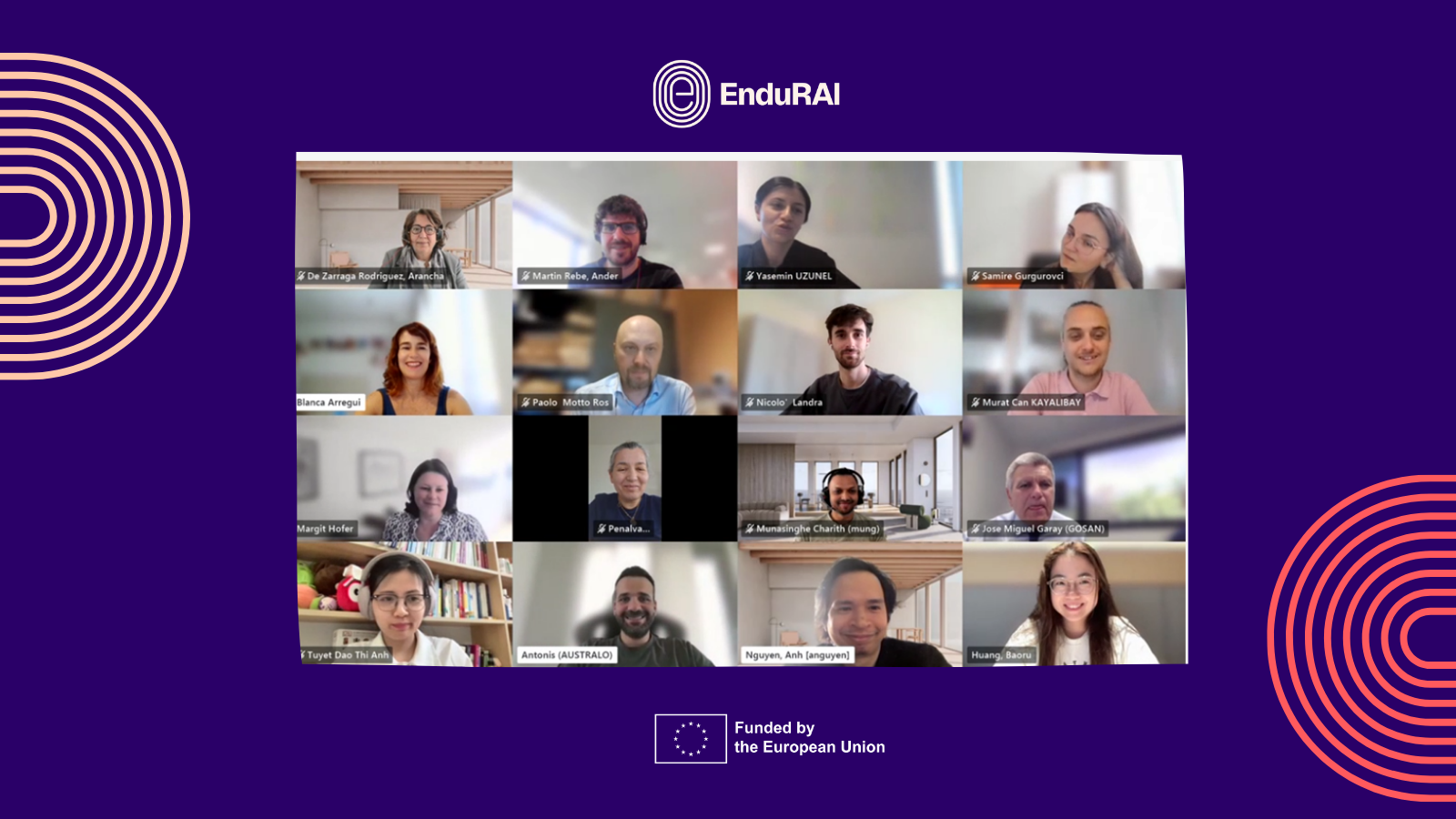
Nine organisations from seven European countries got together on 20 May 2026 for one thing: to start a new project, EnduRAI, around a simple, practical idea: the people doing demanding manufacturing work deserve tools that help them!
EnduRAI is Human-Centric Multimodal Augmentation in Manufacturing with sEMG and AI. It is a project, funded by the European Union, will take 42 months to create wearable sensors, smart software and easy, on-the-job interfaces that enable workers to complete heavy, repetitive or high-precision tasks with less strain and increased clarity, and less surveillance.
The project is managed by the University of Liverpool, in collaboration with the other project partners: Tecnalia, ZHAW, Politecnico di Torino, FPT Software Europe, ZSI, AUSTRALO, CEMRE and GOSAN.
The purpose of this project
Everyone who's worked on a shop floor is aware of the truth: shifts are long, work is strenuous and the same movements are repeated hundreds of times a day. Add the shortage of labour, and it becomes ever more difficult each year to recruit new people to these jobs, and to keep them comfortable and safe in their work.
EnduRAI begins by starting with that reality and not a lab. “This project's vision is to unite wearable sensing, AI and human-machine interfaces to ensure that difficult manufacturing processes are safer, more inclusive and more sustainable, with workers being at the heart of the technology, not the side lines,” said the project's coordinator, Anh Nguyen (LIV), at the project's kickoff.
Specifically, the project is looking to reduce fatigue-related error by at least 10%, and ensure that the technology performs fairly across various bodies and backgrounds, with less than 5% difference between various worker profiles.
What is going on with EnduRAI
In this project, several gadgets are combined: Sensors that read muscle activity directly from the skin.
AI models that transform those signals, along with information from the shop floor, into something useful: warning signs of fatigue, ergonomic risks, or what a worker is going to do next.
Everyday interfaces like dashboards, haptic (vibration) feedback, and voice feedback that convey that information to workers and teams in a way that is easy to understand and respond to, rather than another screen to decipher.
There is no watching or scoring in here. It is intended to be alerting and supportive.
Where is it going to be tested?
EnduRAI will be tested in two real production environments:
- Pulley manufacturing, where the work demands precision and consistency.
- Confined-space shipbuilding welding, one of the most physically demanding jobs in manufacturing.
It is important to test these two very different settings because.
Workers are in the center
Social scientists in the consortium are conducting fieldwork and co-design workshops directly with workers and teams, to ensure that factors like workers' fatigue, comfort, trust, and privacy concerns influence the technology from the outset, rather than as an added extra when the sensors are already designed. A special Worker Representatives Board will ensure this voice remains in the project life.
What happens next
The consortium will refine the needs collected from workers and manufacturers over the next few months and begin prototyping the sEMG wearables and get ready for the first pilot testing. There are already charts of milestones planned through to month 42 and the first worker boards and governance structures have been established.
EnduRAI is funded by the European Union's Horizon Europe programme via the European Health and Digital Executive Agency (HADEA) under Grant Agreement No. 101294228.
